Stainless steel hex bar is solid hexagonal section, sized across the flats, and it exists for one main reason: a hexagon can be gripped and indexed. That makes it the standard starting stock for fasteners, unions, valve bodies, adapters and any turned part that needs a spanner surface. Walmay stocks it from 5 mm to 75 mm across flats in 316L, 316, 304, 304L, 303 and 430, to ASTM A276 and EN 10088-3, cold drawn to h11 as standard, in 3 metre and 6 metre lengths or cut to size.

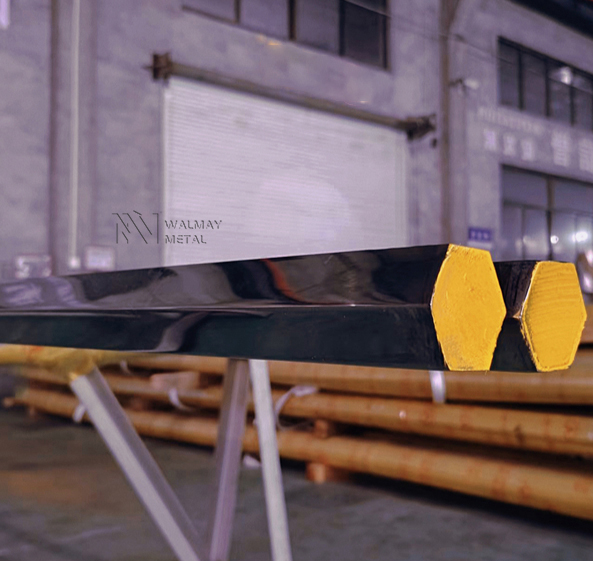

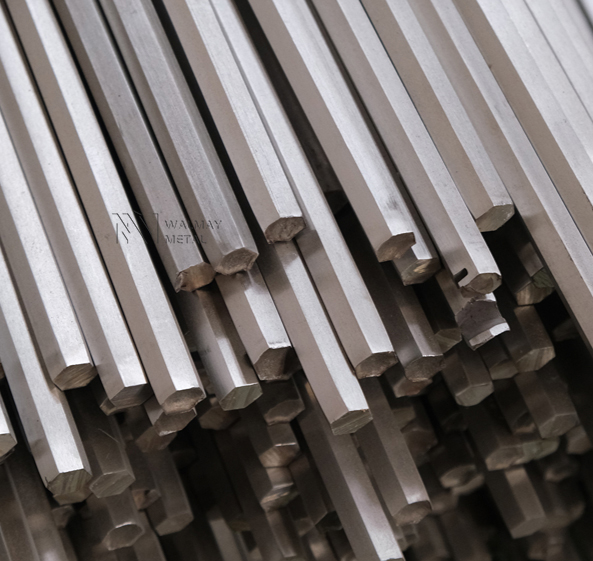
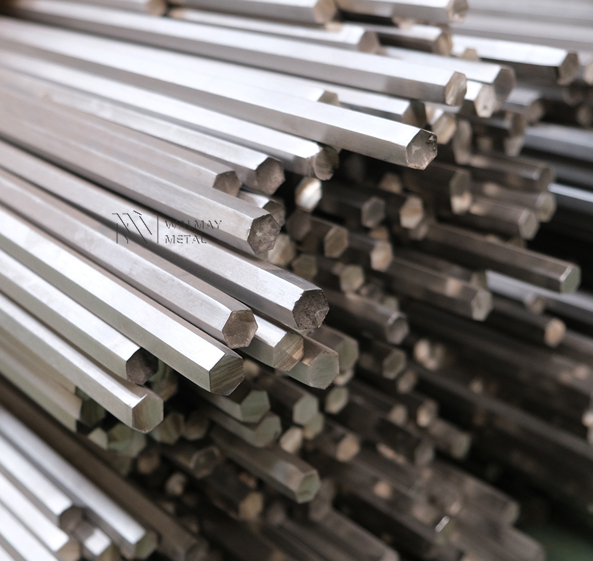
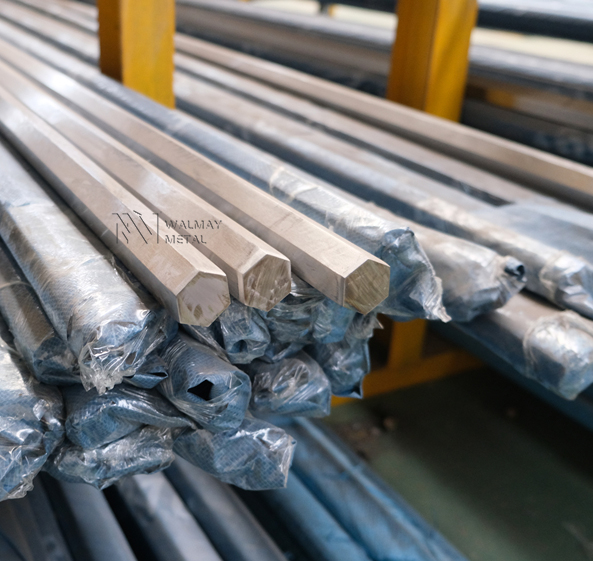




A hexagon is sized across the flats, abbreviated AF. Weight per metre equals the across-flats dimension squared multiplied by 0.00693 for austenitic grades. The diagonal, across corners, is 1.155 times the across-flats dimension, which is the figure that matters when the bar has to pass through a bore or a bar feeder.
| Across flats | Across corners | Weight per metre | Weight per 3 m |
|---|---|---|---|
| 5 mm | 5.8 mm | 0.17 kg | 0.5 kg |
| 6 mm | 6.9 mm | 0.25 kg | 0.7 kg |
| 7 mm | 8.1 mm | 0.34 kg | 1.0 kg |
| 8 mm | 9.2 mm | 0.44 kg | 1.3 kg |
| 10 mm | 11.5 mm | 0.69 kg | 2.1 kg |
| 12 mm | 13.9 mm | 1.00 kg | 3.0 kg |
| 13 mm | 15.0 mm | 1.17 kg | 3.5 kg |
| 14 mm | 16.2 mm | 1.36 kg | 4.1 kg |
| 17 mm | 19.6 mm | 2.00 kg | 6.0 kg |
| 19 mm | 21.9 mm | 2.50 kg | 7.5 kg |
| 22 mm | 25.4 mm | 3.35 kg | 10.1 kg |
| 24 mm | 27.7 mm | 3.99 kg | 12.0 kg |
| 27 mm | 31.2 mm | 5.05 kg | 15.2 kg |
| 30 mm | 34.6 mm | 6.24 kg | 18.7 kg |
| 36 mm | 41.6 mm | 8.98 kg | 26.9 kg |
| 41 mm | 47.3 mm | 11.65 kg | 35.0 kg |
| 46 mm | 53.1 mm | 14.66 kg | 44.0 kg |
| 50 mm | 57.7 mm | 17.33 kg | 52.0 kg |
| 60 mm | 69.3 mm | 24.95 kg | 74.9 kg |
| 75 mm | 86.6 mm | 38.98 kg | 116.9 kg |
The common sizes track spanner sizes rather than round numbers, which is why 13, 17, 19, 22, 24, 27, 30, 36, 41 and 46 mm dominate stock: they correspond to the hex flats on M8 through M30 fasteners.
| Item | Detail |
|---|---|
| Grades | 316L, 316, 304, 304L, 303, 430, and 2205 duplex to order |
| Standards | ASTM A276, ASTM A582 for free machining, EN 10088-3, JIS G4303 |
| Size range | 5-75 mm across flats |
| Length | 3 m, 6 m, or cut to length plus or minus 1 mm |
| Condition | Cold drawn as standard, hot rolled above about 50 mm |
| Tolerance | h11 standard, h9 by agreement |
| Straightness | Under 1 mm per metre on cold drawn |
| Certification | EN 10204 3.1 with analysis and mechanical results |
| Grade | Machinability | Corrosion resistance | Typical use |
|---|---|---|---|
| 303 | Excellent | Modest, sulphides initiate pitting | High-volume turned parts, indoor and dry |
| 304 / 304L | Fair | Good | General fasteners and fittings |
| 316 / 316L | Fair | Very good, chloride resistant | Marine, chemical, food and pharmaceutical fittings |
| 430 | Good | Indoor only, magnetic | Cost-driven dry indoor parts |
| 2205 duplex | Poor | Excellent, PREN about 35 | High-strength corrosion-resistant fasteners |
| 630 / 17-4 PH | Fair | Good | High-strength fasteners above 1,000 MPa |
| Parameter | Guidance for 316L |
|---|---|
| Cutting speed | 20 to 30 percent below carbon steel |
| Feed | Positive and constant, never dwell |
| Depth of cut | Below the work-hardened layer left by the previous pass |
| Tooling | Sharp carbide, positive rake, generous chip clearance |
| Coolant | Flood, high volume |
| Threading | Roll or cut with sharp tooling; use anti-seize on assembly since austenitics gall |
| Rigidity | Maximum, chatter work hardens the surface immediately |
Our bar and rod machining guide covers grade choice, tolerance classes and setup practice across all bar sections in more detail.
| Item | Detail |
|---|---|
| Minimum order | 300 kg from stock, 2 tonnes for mill sizes |
| Lead time from stock | 7-12 days |
| Lead time mill run | 30-45 days |
| Stock range | 8-46 mm AF in 303, 304 and 316L |
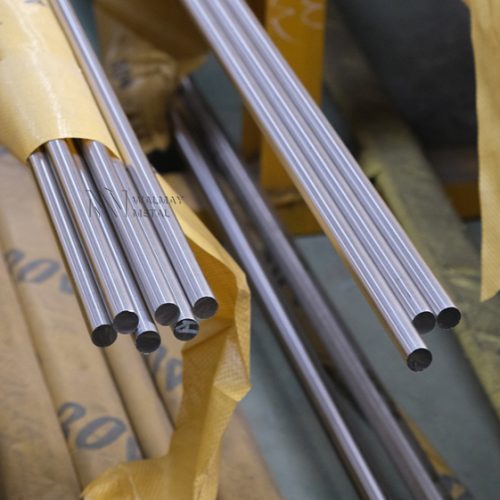
| Packing | Bundled and strapped, tubes for small sizes |
| Incoterms | FOB, CIF, DAP |
Quote the across-flats size, grade, tolerance class, length or cut list and quantity, and state the bar feeder capacity if the material is going onto an automatic lathe. Related products: round bar, square bar, flat bar, 316 rod and bar, 303 free machining bar, and the full bar and rod range.
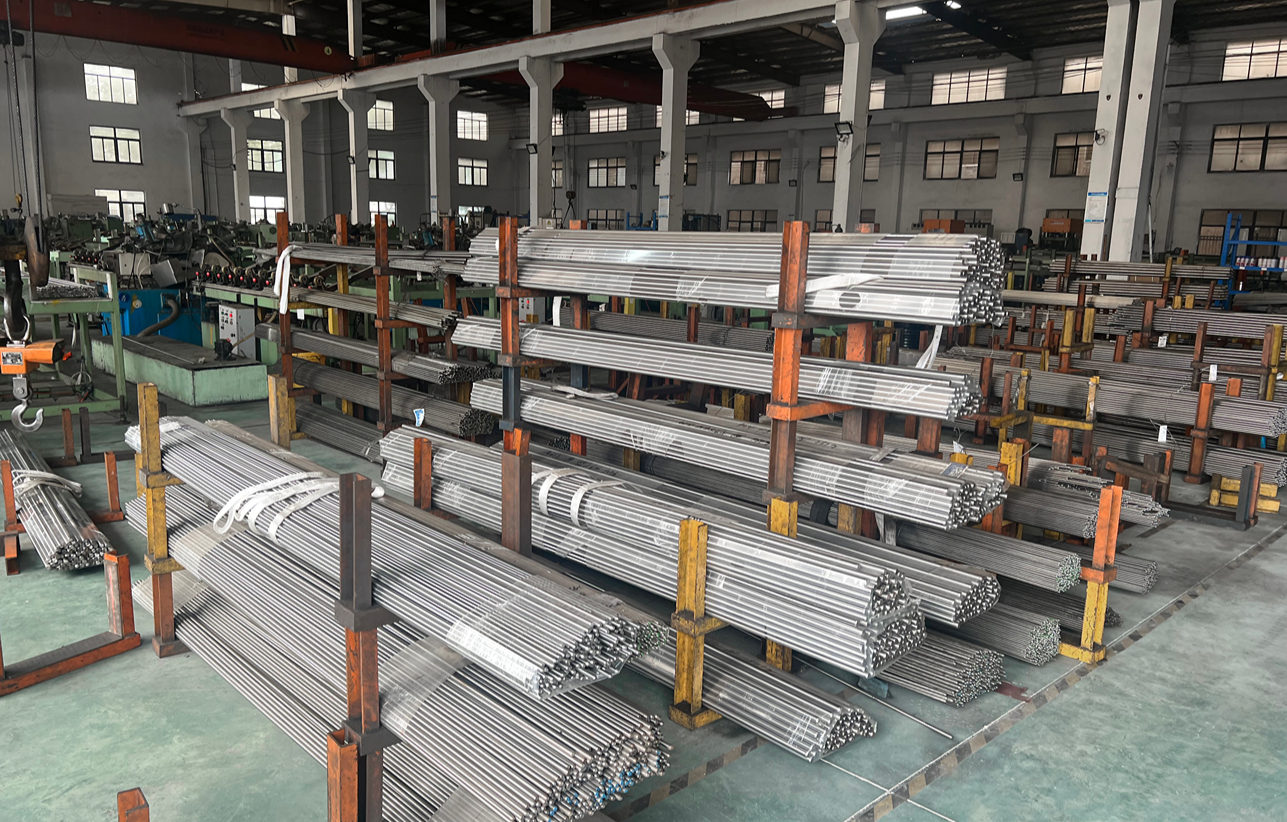
Stainless Steel Bar Inventory Racking System
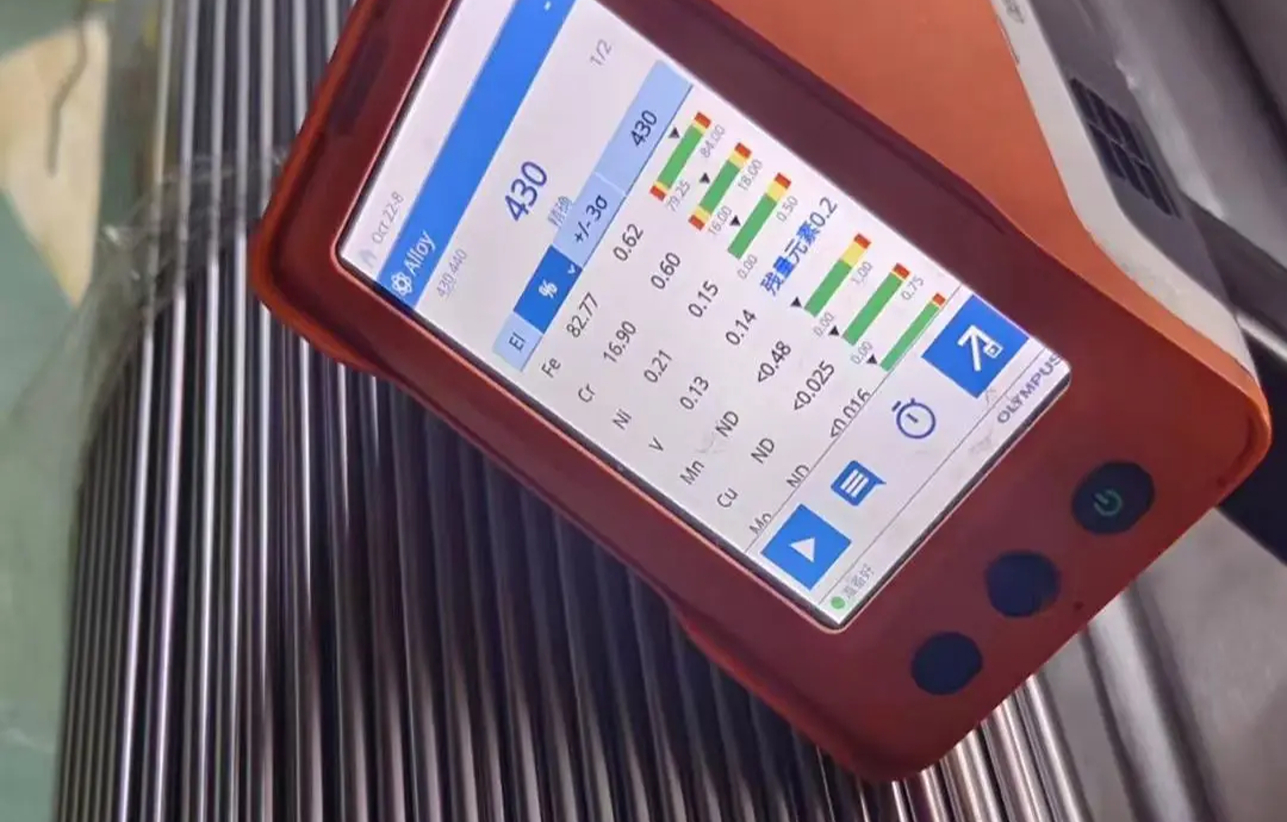
Spectrometer for Alloy Composition Analysis
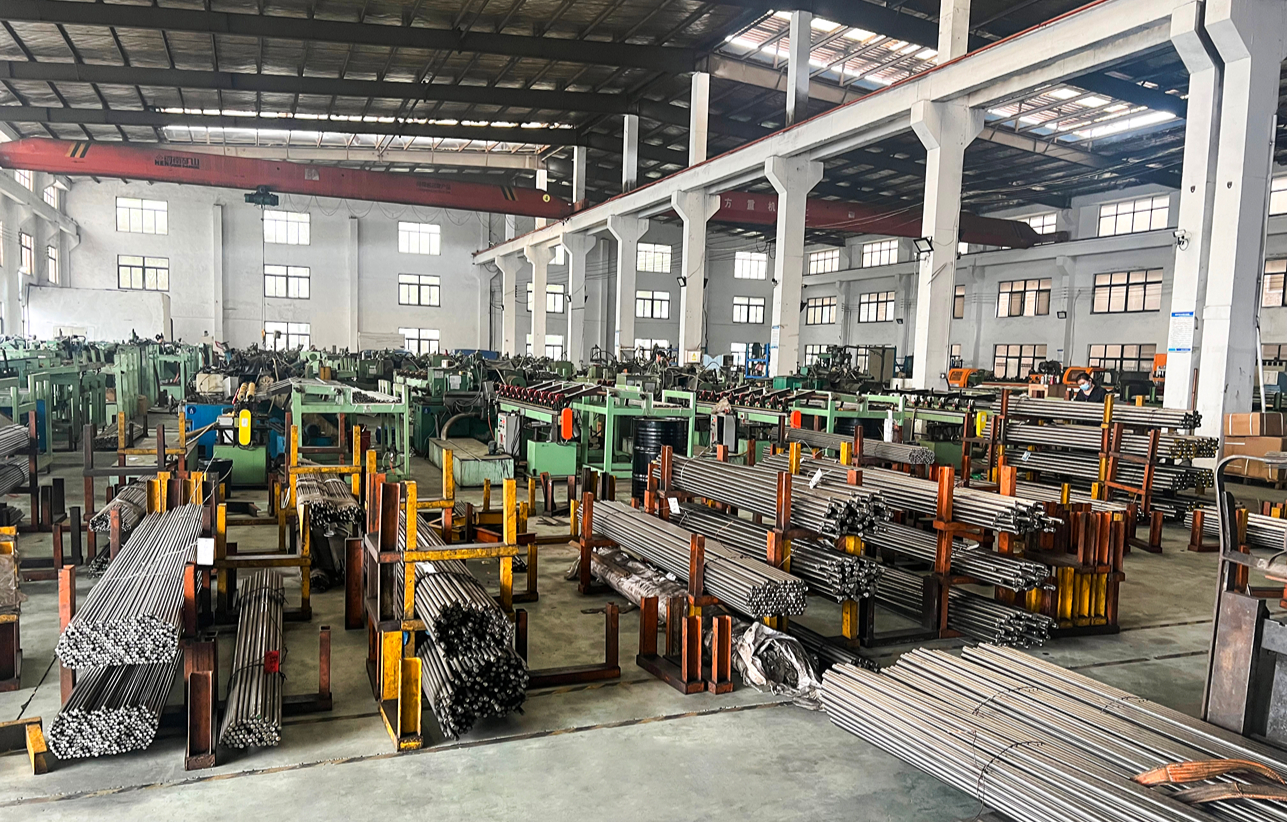
Finished Stainless Steel Bars on Storage Racks
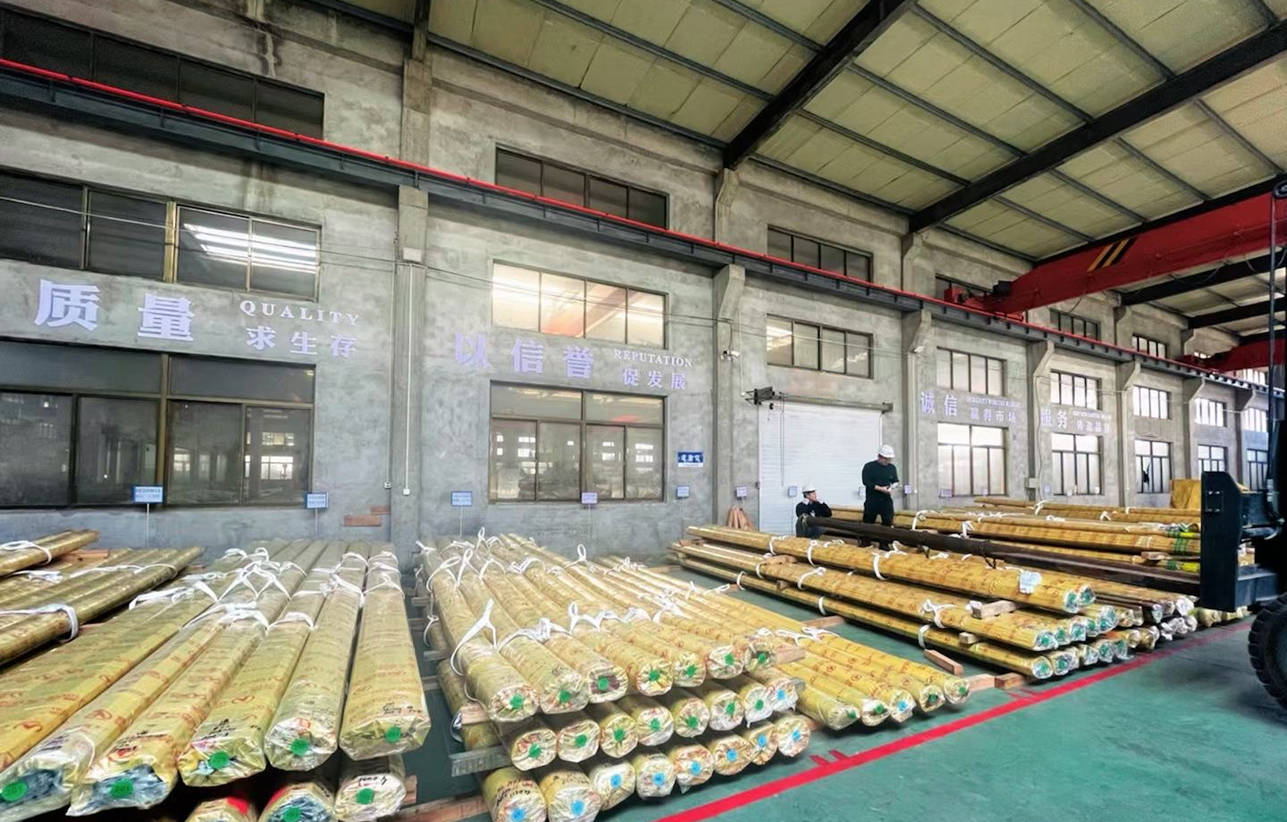
Palletized Stainless Steel Bars on Workshop Floor
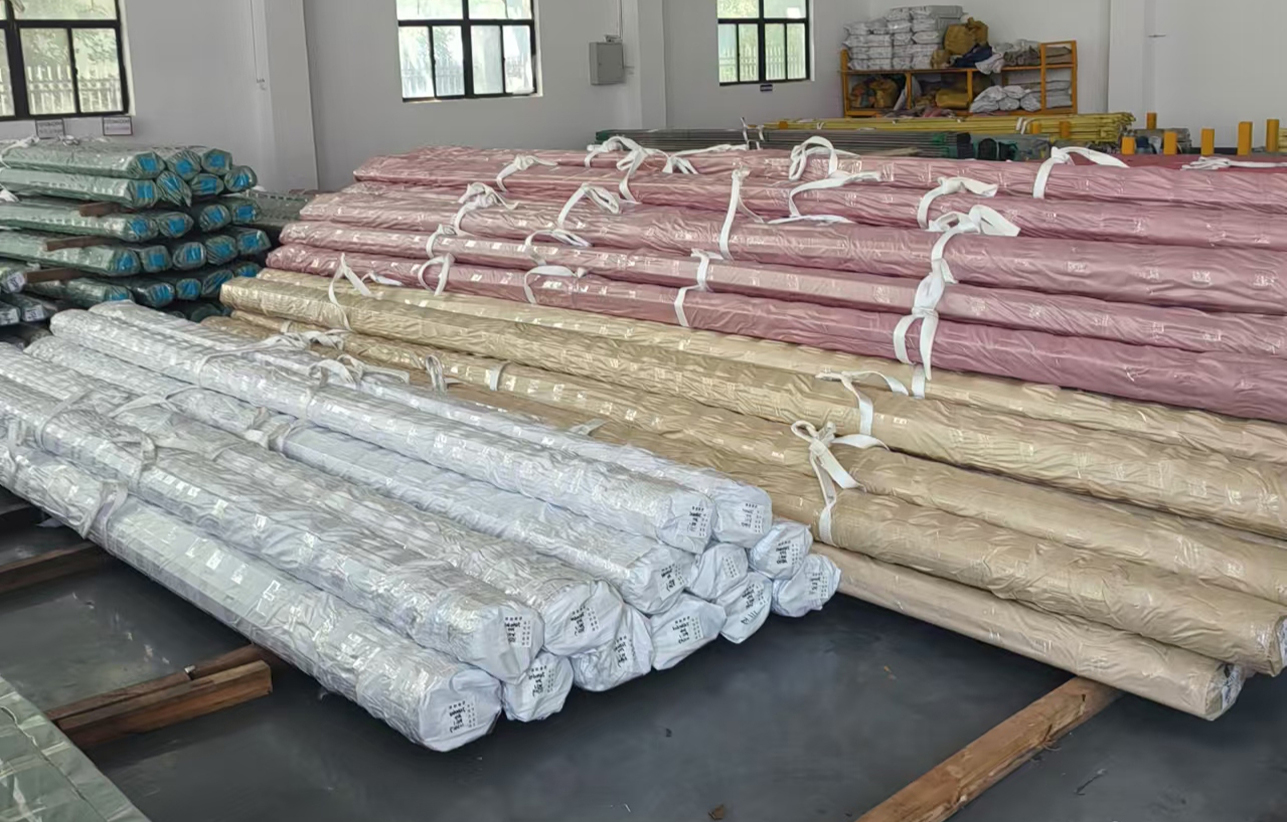
Secured Stainless Steel Bar Bundles for Shipment
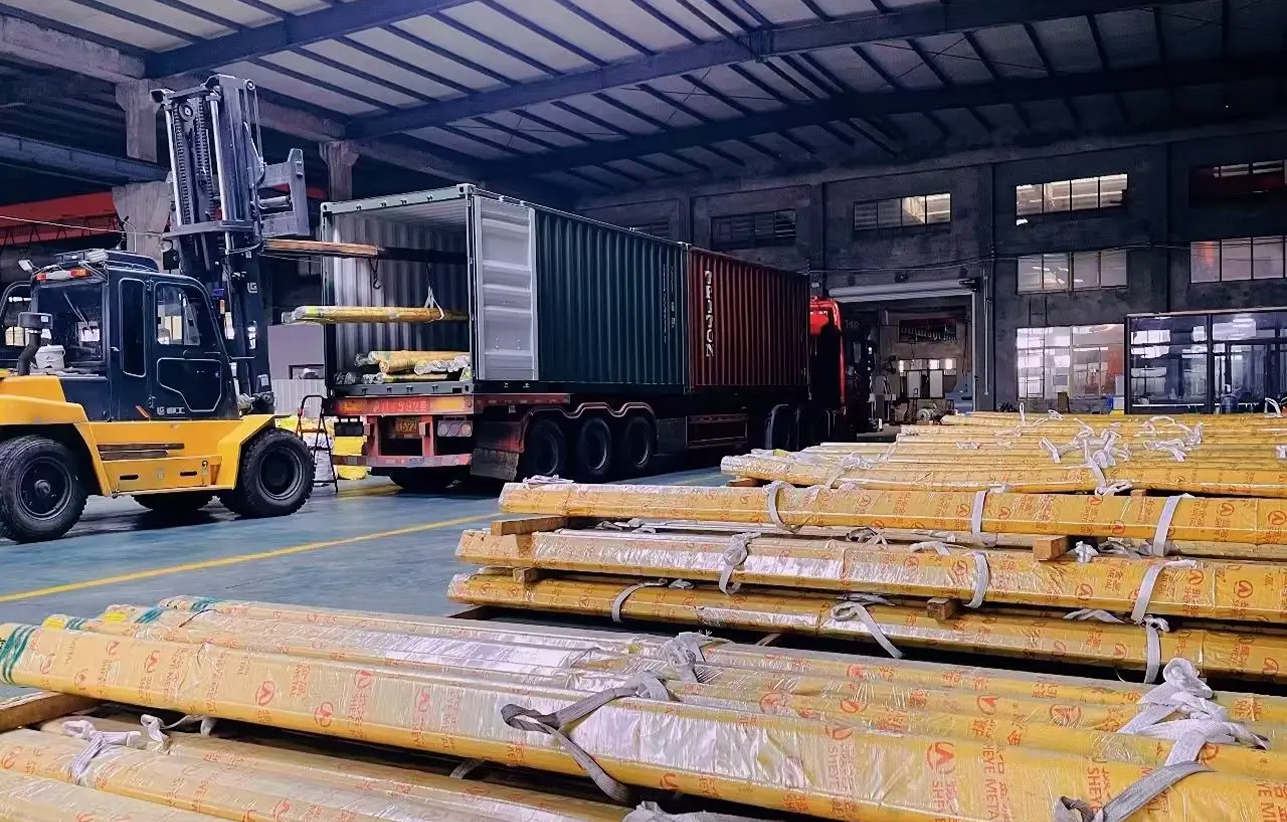
Forklift Loading Bundled Stainless Steel Bars into Freight Truck


Stainless steel hex bar is solid hexagonal section, sized across the flats, and it exists for one main reason: a hexagon can be gripped and indexed. That makes it the standard starting stock for fasteners, unions, valve bodies, adapters and any turned part that needs a spanner surface. Walmay stocks it from 5 mm to 75 mm across flats in 316L, 316, 304, 304L, 303 and 430, to ASTM A276 and EN 10088-3, cold drawn to h11 as standard, in 3 metre and 6 metre lengths or cut to size.
Hexagonal rod and hex bar describe the same product, and both are supplied to ASTM A276 or EN 10088-3. What matters on a purchase order is which dimension you are quoting.
| Dimension | Meaning | When it matters |
|---|---|---|
| Across flats, AF | Distance between two opposite flats, the nominal size | Always. This is how hex bar is designated |
| Across corners, AC | Distance between two opposite corners, 1.155 times AF | Bar feeder capacity, collet selection, clearance in a bore |
| Tolerance class | h11 standard cold drawn, h9 by agreement | Whether the bar will run in a collet or hex socket without play |
Quoting the across-corners dimension by mistake is the most frequent ordering error on hex bar, and it produces stock one size too large. A 19 mm AF bar measures 21.9 mm across corners, so a machine with a 22 mm capacity will take it while a 20 mm capacity will not.

The hexagon serves three distinct purposes, and understanding which one applies tells you what tolerance and grade to order.
For turned fasteners in volume, the grade decision is usually between 303 and 316L. 303 has sulphur added to break chips and machines dramatically better, cutting cycle times and tool wear, but those sulphide inclusions are pitting initiation sites, so it should not be used in chloride or marine service. 316L machines worse but survives the environment. Where both matter, machine 316L with sharp carbide and flood coolant and accept the cycle time, or consider a nitrogen-alloyed improved-machinability austenitic.


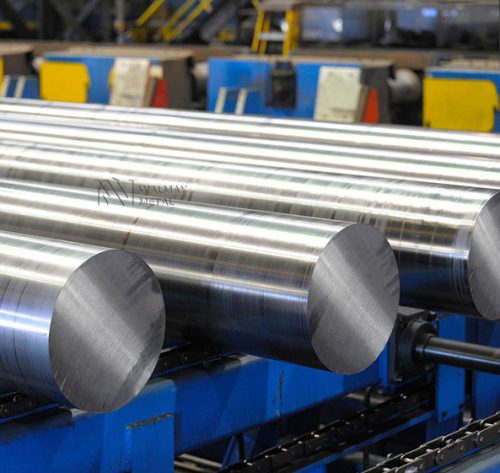

Walmay will help match the right stainless product form and specification for your application, confirm quantities and packing needs, and provide requested documents based on order requirements.
Loading form…