 By Walmay
 21 Jan, 2026
 10 Minutes Read
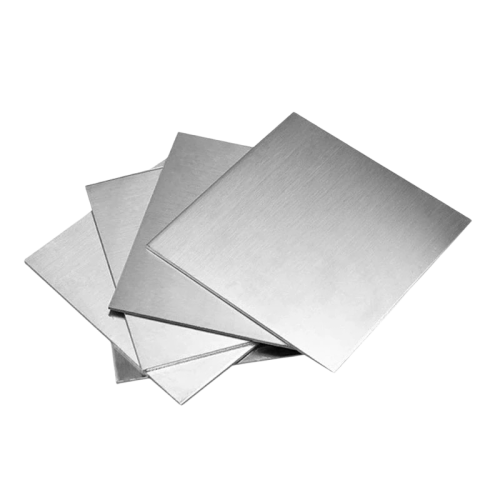
Cold rolled steel plate is flat product that has been reduced to its final thickness at room temperature rather than while red hot. That single difference in process changes the tolerance, the surface, the strength and the price, and it is why a drawing that says cold rolled is making a real specification rather than expressing a preference. This guide covers what cold rolling does, where the sheet and plate boundary actually falls, what tolerances to expect, and when the premium over hot rolled is worth paying. It applies to stainless steel throughout, with notes on carbon steel where the practice differs.
Hot rolling takes a slab above its recrystallisation temperature, around 1,100 C for steel, and squeezes it down while the metal is soft. The grain structure reforms continuously as it deforms, so the material comes out soft and dimensionally loose, with a dark oxide scale.
Cold rolling starts from hot rolled coil that has been pickled to remove that scale, then reduces it further at room temperature. The grains cannot reform, so they deform and stretch, and the metal work hardens as it thins. The result is stronger, harder, dimensionally precise and bright, but also full of internal stress, which is why cold rolled stainless is annealed after rolling to restore ductility.
| Aspect | Hot rolled | Cold rolled |
|---|---|---|
| Rolling temperature | Above 1,100 C | Room temperature |
| Surface | No.1 pickled on stainless, mill scale on carbon steel | 2B, 2D or BA on stainless, smooth grey on carbon steel |
| Thickness tolerance | Plus or minus 0.4 to 1.5 mm | Plus or minus 0.03 to 0.15 mm |
| Flatness | Moderate, needs levelling | Good, better after tension levelling |
| Edges | Slightly rounded as rolled | Square, or trimmed |
| Strength as delivered | Lower, as rolled | Higher if not annealed; equal after annealing |
| Internal stress | Low | High unless annealed or levelled |
| Thickness range | 2 mm upward, no practical ceiling | 0.05 to about 6 mm |
| Cost | Baseline | 15-40 percent higher |
For stainless steel there is one more difference that matters. Cold rolled stainless is annealed and pickled after rolling, which is what the 2B designation means: cold rolled, annealed, pickled and lightly skin passed. So cold rolled stainless is not harder than hot rolled stainless in the delivered condition; both meet the same 205 MPa minimum yield for 304. What you buy with cold rolling is dimension and surface, not strength.
This is where terminology causes confusion on purchase orders. In flat product the industry convention is:
| Product | Thickness | Normal production route |
|---|---|---|
| Foil | Below 0.05 mm | Cold rolled |
| Strip | Up to 600 mm wide, 0.05-3.0 mm | Cold rolled |
| Sheet | Above 600 mm wide, under 4.75 mm | Cold rolled |
| Plate | Above 4.75 mm | Hot rolled |
So strictly, plate is hot rolled and sheet is cold rolled, and the 4.75 mm line is where the two meet. In practice cold rolling is possible up to about 6 mm, and mills do supply cold rolled material in the 4.75 to 6 mm band where a customer needs sheet tolerances and a 2B surface at that thickness. Above 6 mm cold rolling becomes uneconomic: the rolling loads required are enormous and the material must be annealed repeatedly.
The practical answer when a drawing says cold rolled plate at, say, 8 mm is to query it. Either the thickness is right and the material must be hot rolled, or the finish requirement is what matters and the thickness can come down. We cover the full boundary and the products either side of it on our sheet and plate page, with hot rolled material on the hot rolled plate page.
Cold rolled sheet is often specified by gauge rather than by millimetres, particularly in North America.
| Gauge | Thickness | Typical cold rolled tolerance |
|---|---|---|
| 26 ga | 0.48 mm | Plus or minus 0.03 mm |
| 24 ga | 0.64 mm | Plus or minus 0.04 mm |
| 22 ga | 0.79 mm | Plus or minus 0.05 mm |
| 20 ga | 0.95 mm | Plus or minus 0.05 mm |
| 18 ga | 1.27 mm | Plus or minus 0.06 mm |
| 16 ga | 1.59 mm | Plus or minus 0.08 mm |
| 14 ga | 1.98 mm | Plus or minus 0.10 mm |
| 12 ga | 2.78 mm | Plus or minus 0.12 mm |
| 11 ga | 3.18 mm | Plus or minus 0.13 mm |
| 10 ga | 3.57 mm | Plus or minus 0.15 mm |
Compare that with hot rolled plate, where 10 mm material is held to about plus or minus 0.7 mm and 25 mm to plus or minus 1.0 mm. The cold rolled tolerance is roughly an order of magnitude tighter, which is what makes it the right choice for press tooling, laser cutting and any part where thickness enters an assembly stack.
| Finish | Meaning | Where it is used |
|---|---|---|
| 2B | Cold rolled, annealed, pickled, lightly skin passed | The default industrial cold rolled stainless finish |
| 2D | Cold rolled and annealed without skin pass, matte | Deep drawing, where a matte surface holds lubricant |
| BA | Bright annealed in a protective atmosphere, highly reflective | Appliance panels, reflectors, decorative work |
| No.4 and mirror | Mechanically polished from a 2B base | Visible surfaces, polished sheet |
| No.1 | Hot rolled, annealed and pickled, matte and rough | The hot rolled equivalent, plate only |
For carbon steel the equivalents are CRS, cold rolled steel, usually supplied oiled to prevent rust, and HRPO, hot rolled pickled and oiled, which sits between hot and cold rolled in both surface and price.
Expect 15 to 40 percent above hot rolled material of the same grade and thickness where both are available, and the spread depends on three things: the number of rolling passes, which rises steeply as gauge falls; the annealing and pickling operations that follow; and the yield loss from trimming. In stainless specifically, the alloy surcharge dominates the total price, so the cold rolling premium is a smaller proportion of the whole than it is in carbon steel, where the processing is a larger share of a cheaper product.
Two commercial points are worth knowing. First, thin cold rolled gauges cost more per tonne than thicker ones, which inverts the intuition that thinner means cheaper; the sheet is cheaper per square metre but dearer per kilogram. Second, if a part is going to be machined or ground on its faces anyway, the cold rolled tolerance is being paid for and then thrown away, so hot rolled is the correct buy.
| Limitation | Consequence | What to do about it |
|---|---|---|
| Internal stress from rolling and coiling | Sheet will not lie flat, parts distort after laser cutting | Specify tension levelling to 0.1 mm per square metre |
| Thickness limit of about 6 mm | Heavier sections must be hot rolled | Accept hot rolled tolerances, or machine |
| Higher cost | 15-40 percent premium | Only buy it where tolerance or finish is used |
| Work hardening in carbon steel CRS | Reduced formability if not annealed | Order annealed material for forming |
| Directionality | Properties and formability differ along and across the rolling direction | Orient bend lines across the rolling direction |
| Surface marks show | A bright finish reveals handling damage | Order PVC filmed, keep the film on through fabrication |
| Carbon steel CRS rusts readily | The bright surface has no scale to protect it | Order oiled, store dry, or specify stainless |
The internal stress point is the one that costs money in practice. A laser-cut part from unlevelled cold rolled sheet can spring out of flat as soon as the surrounding material is removed, because the cut releases the residual stress. If you are laser cutting, buy levelled material and say so on the order.
| Term | Meaning |
|---|---|
| CRS | Cold rolled steel, the common abbreviation |
| CR or CRC | Cold rolled, cold rolled coil |
| Cold reduced | The formal term used in some standards, notably for tinplate |
| Full finish or bright | Trade terms for cold rolled carbon steel with a bright surface |
| 2B, 2D, BA | Stainless finish designations that imply cold rolled production |
| CRCA | Cold rolled close annealed, common in Indian and Asian usage |
| HRPO | Hot rolled pickled and oiled, which is not cold rolled but is often offered as a cheaper alternative |
Cold drawn is a different process again and applies to bar and tube rather than flat product: the material is pulled through a die rather than rolled between rolls.
| Requirement | Choose |
|---|---|
| Thickness tolerance tighter than 0.2 mm | Cold rolled |
| Bright or polished surface | Cold rolled, or polished from a cold rolled base |
| Thickness above 6 mm | Hot rolled |
| Laser cutting with tight flatness | Cold rolled and tension levelled |
| Deep drawing | Cold rolled 2D, annealed |
| Structural plate for welding | Hot rolled |
| Parts machined on both faces | Hot rolled, and save the premium |
| Pressure vessel plate | Hot rolled to the applicable code |
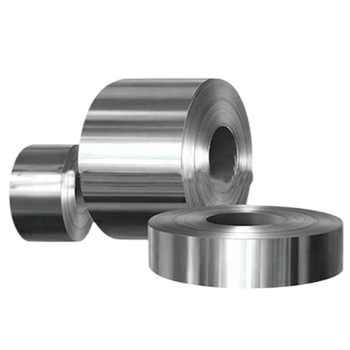
We supply both routes and process either: cutting, levelling, slitting, bending and polishing, described on the fabrication page. Related products: 304 sheet, 316 and 316L sheet, 304 cold rolled coil, strip, hot rolled plate.
Six things matter. It carries internal stress from rolling and coiling, so parts distort after laser cutting unless the material is tension levelled. It is limited to about 6 mm thickness, so heavier sections must be hot rolled. It costs 15 to 40 percent more. In carbon steel it work hardens, reducing formability unless annealed. Its properties are directional, so bend lines should run across the rolling direction. And its bright surface shows every handling mark, which is why it is normally supplied PVC filmed.
Better at holding dimensions and at surface quality, and no better at anything else. In stainless steel, cold rolled material is annealed after rolling, so it meets the same mechanical minimums as hot rolled: 205 MPa yield for 304 either way. What you buy is a thickness tolerance roughly ten times tighter and a 2B, 2D or BA finish instead of a rough No.1 surface. If a part will be machined all over, or is a structural plate that gets welded and painted, hot rolled is the better buy because the premium buys nothing you use.
CRS is the standard abbreviation, along with CR and CRC for cold rolled coil. Formal standards sometimes say cold reduced. In Indian and Asian usage CRCA, cold rolled close annealed, is common. In stainless steel, the finish designations 2B, 2D and BA all imply cold rolled production, so a sheet specified as 2B is cold rolled by definition. Cold drawn is a different process for bar and tube, where material is pulled through a die rather than rolled.
Typically 15 to 40 percent above hot rolled of the same grade and thickness, driven by the extra rolling passes, the annealing and pickling that follow, and trimming yield loss. In stainless the alloy surcharge dominates the total, so the cold rolling premium is proportionally smaller than it is in carbon steel. Note that thin gauges cost more per tonne than thick ones, so a thinner sheet is cheaper per square metre but more expensive per kilogram, which catches out buyers comparing quotations on weight.
Rarely, and not economically. Cold rolling above about 6 mm requires very high rolling loads and repeated annealing, so mills do not offer it as a standard product. Material in the 4.75 to 6 mm band is available cold rolled where sheet tolerances and a 2B finish are needed at that thickness. Above 6 mm, either accept hot rolled with its wider tolerance and No.1 surface, or specify hot rolled and machine or grind the faces to the tolerance you need.
If it will be laser cut, formed to a tight tolerance, or used as a visible flat panel, yes. Rolling and coiling leave residual stress and coil set, and cutting a part out releases that stress so the part springs out of flat. Tension levelling to 0.1 mm per square metre removes it. Material going straight into a press or roll former, where the tooling controls the shape, generally does not need it.
The process is the same but the products behave differently. Cold rolled carbon steel, CRS, is supplied work hardened and bright, with no protective scale, so it rusts quickly and is normally shipped oiled. Cold rolled stainless is annealed and pickled after rolling, which restores ductility and rebuilds the passive chromium oxide film, so it arrives soft, bright and corrosion resistant. That is why cold rolled stainless is designated 2B rather than simply CR.
 Industry Knowledge
 Industry Knowledge
 Industry Knowledge
Walmay will help match the right stainless product form and specification for your application, confirm quantities and packing needs, and provide requested documents based on order requirements.
Loading form…