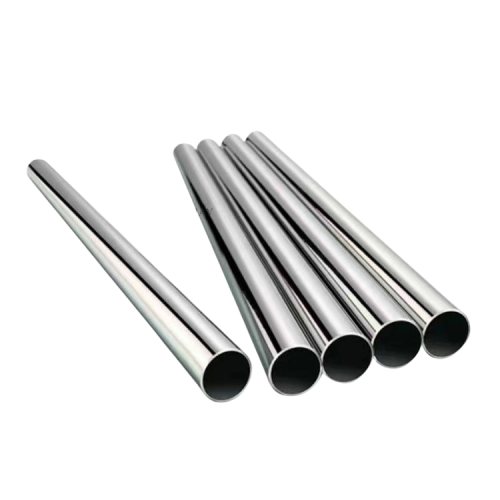
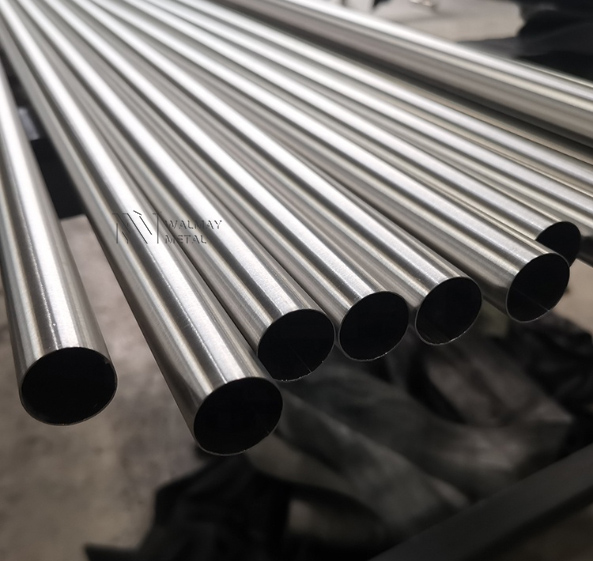
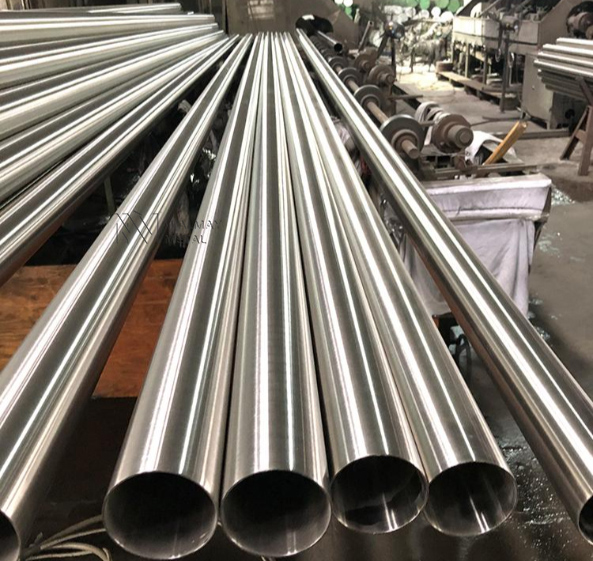
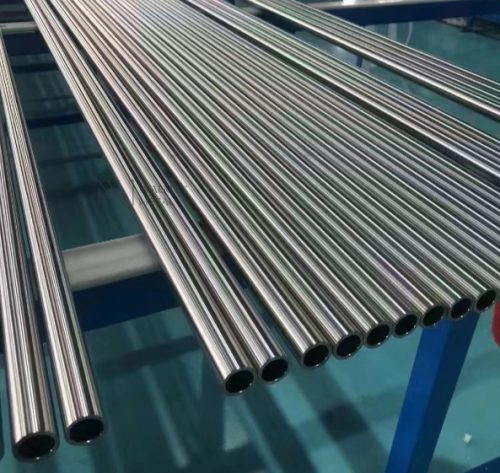
316 stainless steel pipe is the grade to specify when chlorides are in the fluid or in the air around it. Its 2 to 3 percent molybdenum addition lifts the pitting resistance equivalent number from about 19 for 304 to about 25, which is the difference between a line that pits in brackish water and one that does not. Walmay supplies 316 and 316L seamless and welded pipe to ASTM A312 from 1/8 inch to 24 inch NPS in schedules 5S through 80S, plus tube to ASTM A554, A269 and A213 in outside diameters from 6 mm to 168 mm, cut and bevelled to your isometrics.
| Item | Detail |
|---|---|
| Grade | 316, UNS S31600, and 316L, UNS S31603 |
| Pipe standards | ASTM A312 / ASME SA312 seamless and welded, ASTM A358, ASTM A778 |
| Tube standards | ASTM A554, ASTM A269, ASTM A213 |
| Size range, pipe | 1/8 in to 24 in NPS, DN 6 to DN 600 |
| Size range, tube | 6-168 mm OD, 0.5-6.0 mm wall |
| Schedules | 5S, 10S, 20, 40S, 80S, heavier on request |
| Length | 6 m random, 3 m, or cut to length |
| Ends | Plain, bevelled 30 degrees, threaded |
| Condition | Solution annealed and pickled |
| PREN | About 25 |
| Certification | EN 10204 3.1, hydrostatic or eddy current test per A312 |
| Element | 316 | 316L |
|---|---|---|
| Carbon | 0.08 max | 0.035 max |
| Chromium | 16.0-18.0 | 16.0-18.0 |
| Nickel | 11.0-14.0 | 10.0-15.0 |
| Molybdenum | 2.00-3.00 | 2.00-3.00 |
| Manganese | 2.00 max | 2.00 max |
| Silicon | 1.00 max | 1.00 max |
| Phosphorus | 0.045 max | 0.045 max |
| Sulphur | 0.030 max | 0.030 max |
Check the molybdenum figure on every certificate. Below 2.00 percent the material does not meet A312 for this grade, whatever the stencil says, and the entire reason for choosing it disappears.
| Property | 316 | 316L |
|---|---|---|
| Yield strength minimum | 205 MPa | 170 MPa |
| Tensile strength minimum | 515 MPa | 485 MPa |
| Elongation | 35 percent | 35 percent |
| Hardness | 90 HRB max | 90 HRB max |
| Density | 8.0 g/cm3 | 8.0 g/cm3 |
| Maximum continuous service | About 870 C | About 870 C |
Dimensions to ASME B36.19M. Weight calculated at 8.0 g/cm3.
| NPS | OD | Sch 10S wall | Sch 10S kg/m | Sch 40S wall | Sch 40S kg/m | Sch 80S wall | Sch 80S kg/m |
|---|---|---|---|---|---|---|---|
| 1/2 in | 21.3 mm | 2.11 mm | 1.02 | 2.77 mm | 1.27 | 3.73 mm | 1.64 |
| 3/4 in | 26.7 mm | 2.11 mm | 1.30 | 2.87 mm | 1.72 | 3.91 mm | 2.23 |
| 1 in | 33.4 mm | 2.77 mm | 2.10 | 3.38 mm | 2.55 | 4.55 mm | 3.30 |
| 1 1/2 in | 48.3 mm | 2.77 mm | 3.17 | 3.68 mm | 4.13 | 5.08 mm | 5.51 |
| 2 in | 60.3 mm | 2.77 mm | 3.99 | 3.91 mm | 5.54 | 5.54 mm | 7.62 |
| 3 in | 88.9 mm | 3.05 mm | 6.57 | 5.49 mm | 11.51 | 7.62 mm | 15.55 |
| 4 in | 114.3 mm | 3.05 mm | 8.51 | 6.02 mm | 16.37 | 8.56 mm | 22.75 |
| 6 in | 168.3 mm | 3.40 mm | 14.09 | 7.11 mm | 28.75 | 10.97 mm | 43.35 |
| 8 in | 219.1 mm | 3.76 mm | 20.32 | 8.18 mm | 43.25 | 12.70 mm | 65.72 |
| 10 in | 273.0 mm | 4.19 mm | 28.30 | 9.27 mm | 61.19 | 12.70 mm | 82.87 |
| 12 in | 323.8 mm | 4.57 mm | 36.66 | 9.53 mm | 75.13 | 12.70 mm | 98.99 |
The general formula for any size is kilograms per metre equals (OD minus wall) multiplied by wall multiplied by 0.0251.
| Service | 304 | 316 / 316L | Better option |
|---|---|---|---|
| Municipal potable water | Suitable | Unnecessary | - |
| Brackish or high-chloride water | Pits | Suitable | 2205 duplex above 1,000 mg/l chloride |
| Seawater, flowing | No | Marginal, pits over time | 2507 super duplex or 6Mo |
| Coastal atmosphere, external lines | Tea stains | Suitable | - |
| Food, dairy, brewing | Suitable | Standard where cleaning is aggressive | - |
| Pharmaceutical product lines | Marginal | Standard, A270 with Ra limit | - |
| Sulphuric or phosphoric acid | No | No | 904L |
| Above 870 C | No | No | 310S |
| High pressure, weight critical | Marginal | Marginal | 2205 duplex |
The comparison worth understanding before ordering: 2205 duplex pipe has roughly double the yield strength of 316 and better chloride resistance, and because the wall can be thinner the installed cost is often similar. Where the design is governed by pressure rather than by corrosion alone, it is worth pricing both. Our PREN guide explains the ranking, and the 304 versus 316 comparison covers the more common decision.
| Item | Detail |
|---|---|
| Minimum order | 500 kg from stock, 3 tonnes for a mill run |
| Lead time from stock | 7-12 days |
| Lead time mill run | 35-50 days |
| Stock range | 1/2 in to 8 in NPS in Sch 10S and 40S, 316 and 316L |
| Testing | Hydrostatic or eddy current per A312, PMI, dye penetrant, ferrite check on request |
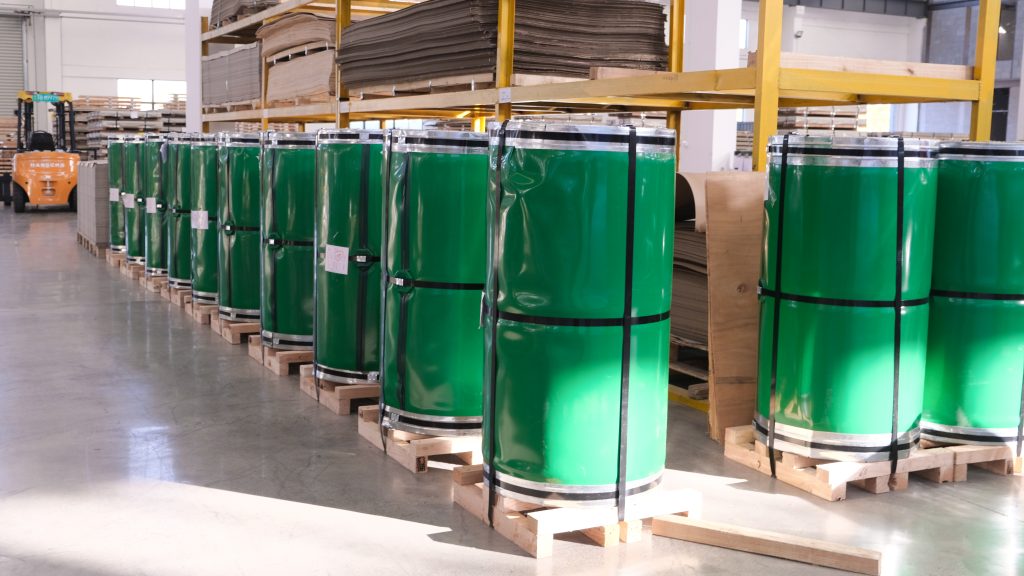
| Packing | Hexagonal bundles, plastic end caps, crated for small sizes |
| Incoterms | FOB, CIF, DAP |
Send NPS or OD, schedule or wall, seamless or welded, whether 316, 316L or dual certified, length, end preparation and quantity. Related products: 316L pipe, 304 pipe, 316Ti pipe, seamless pipe, 2205 duplex pipe, and the full pipe and tube range.
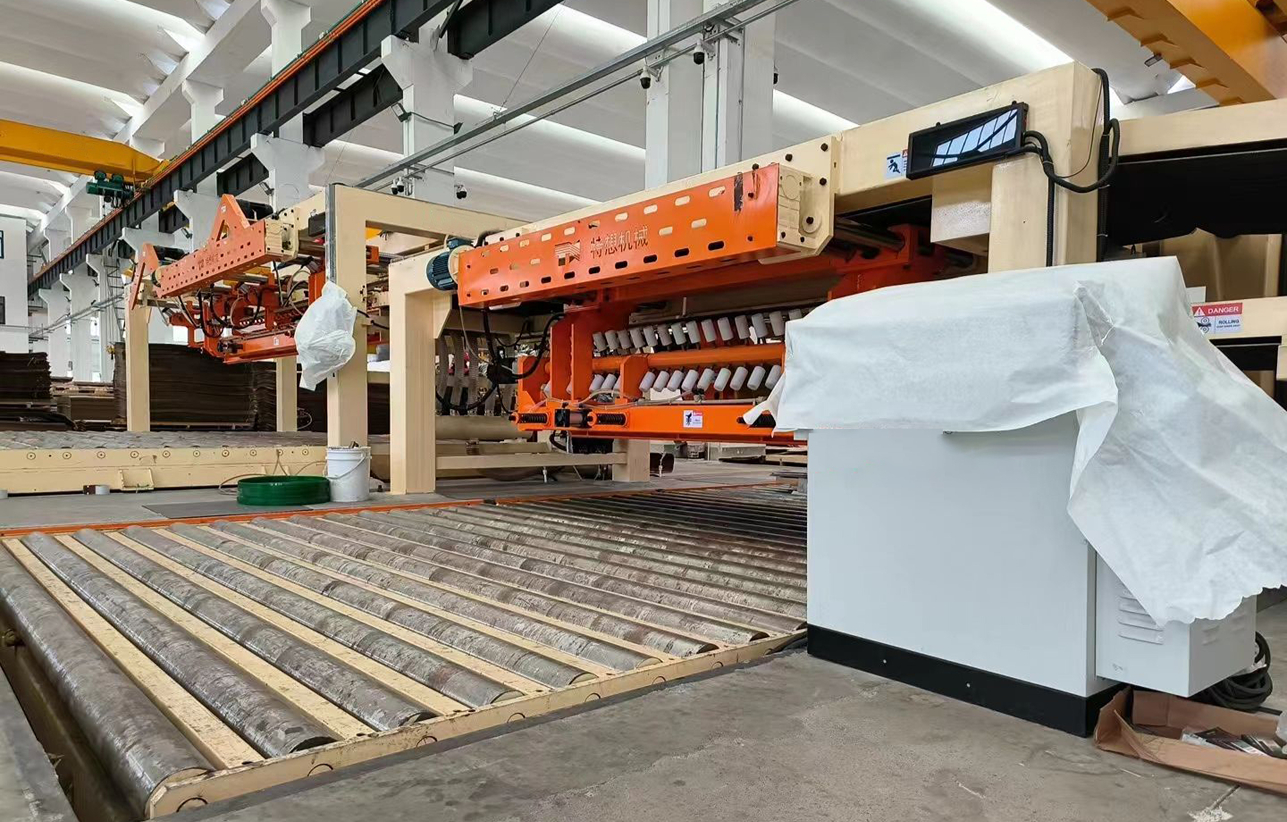
Stainless Steel Plate Bending/Stamping Process
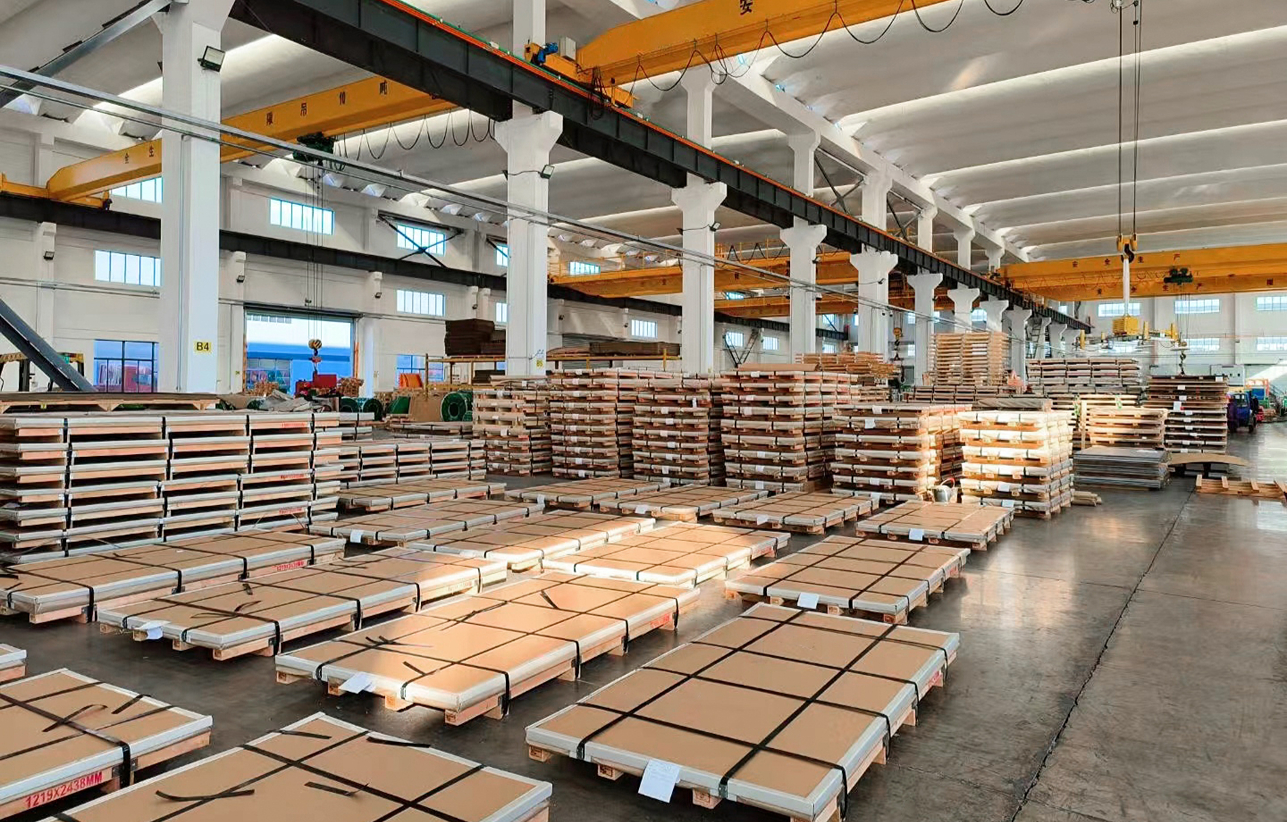
Stainless Steel Plates on Storage Rack
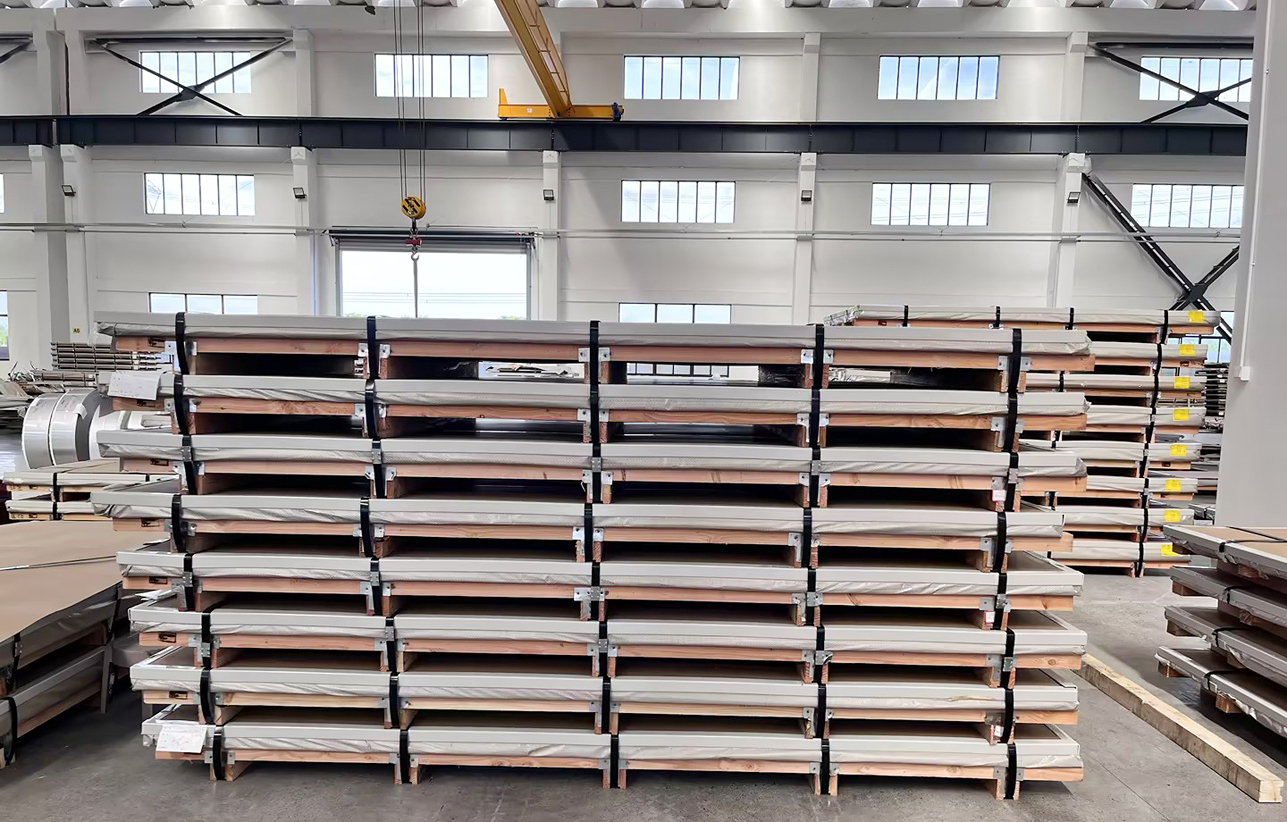
Palletized Stainless Steel Plates
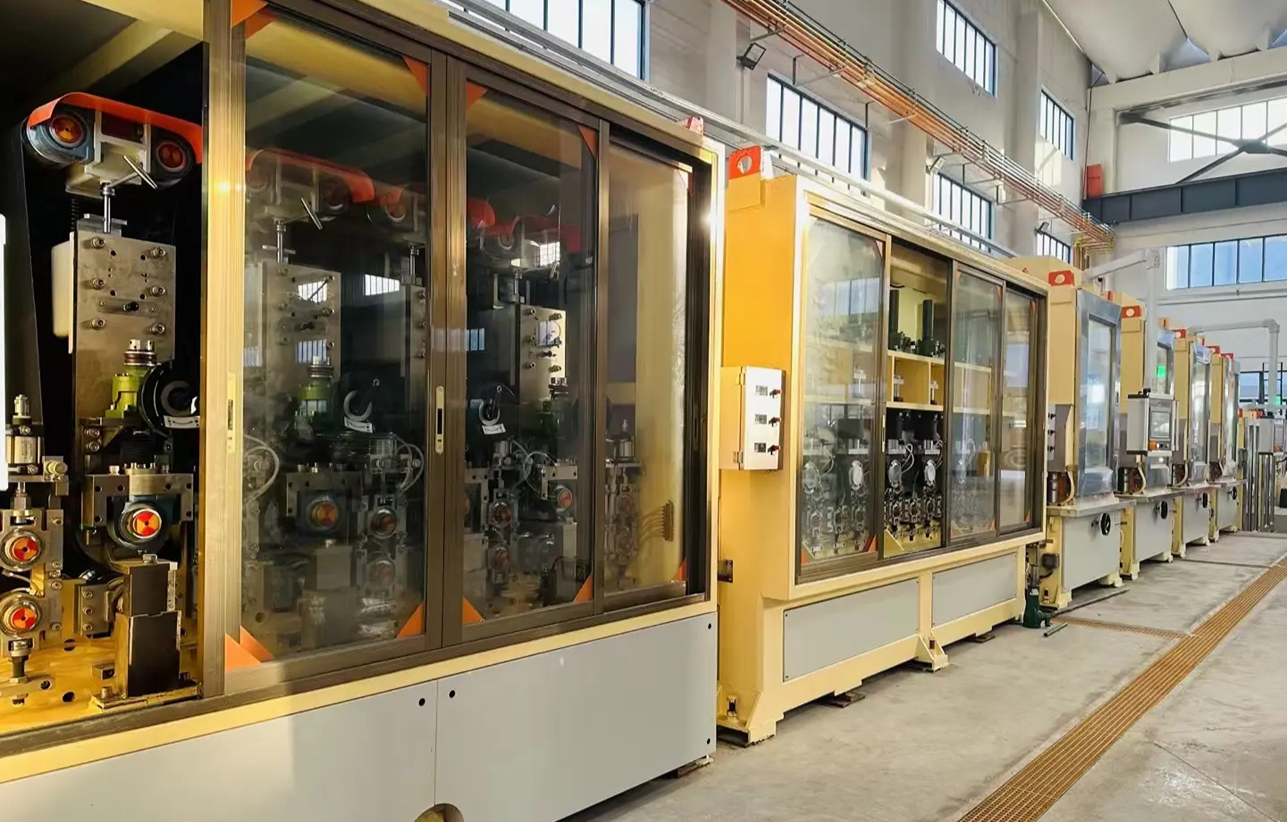
Stainless Steel Plate Rolling Line
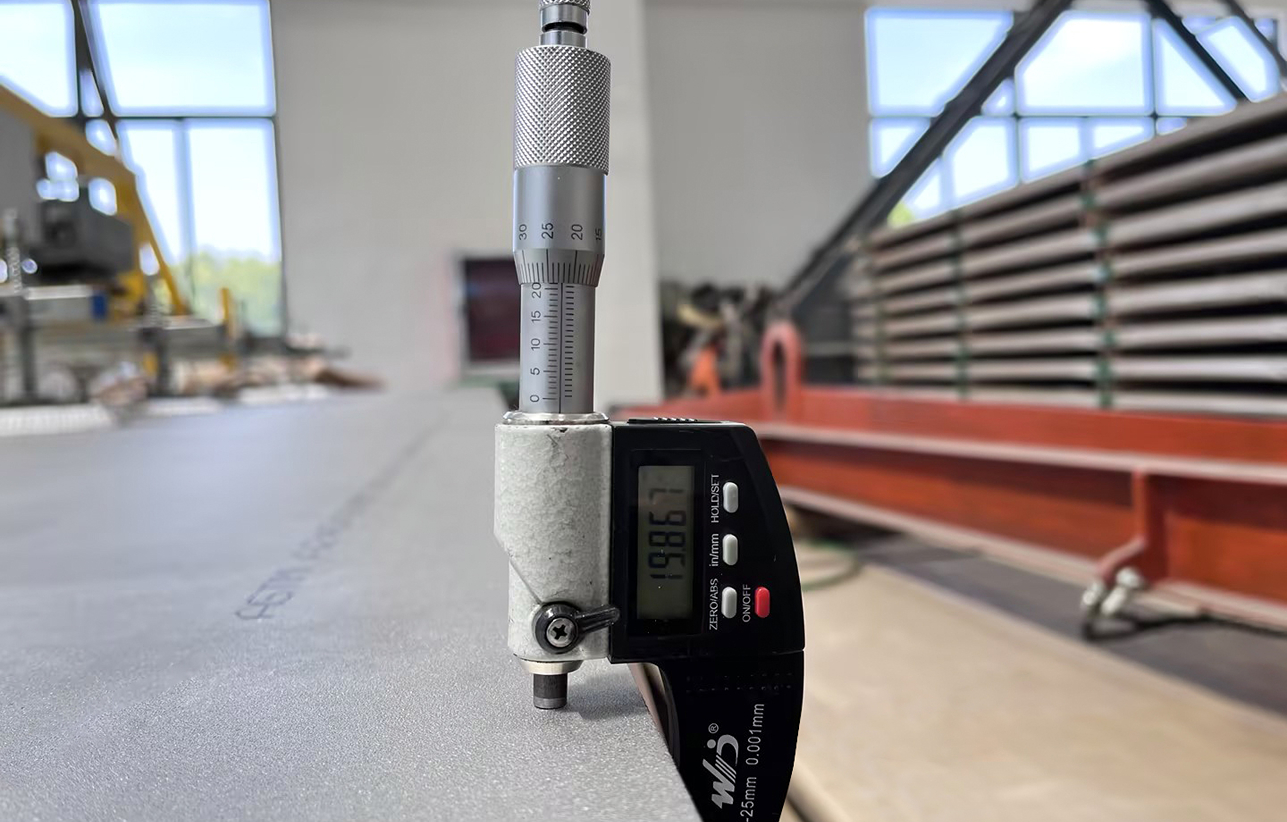
Precision Thickness Inspection of Stainless Steel Plate
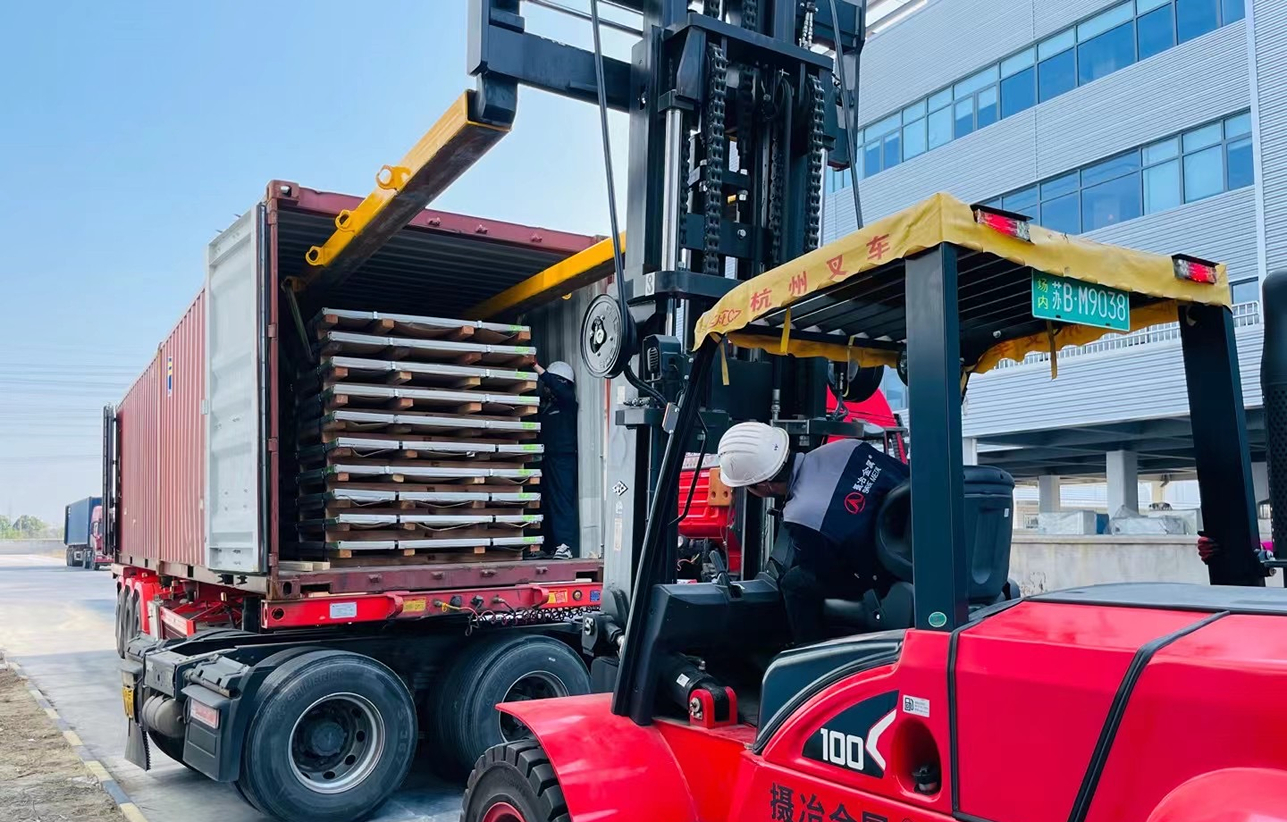
Forklift Loading Stainless Steel Plates for Shipment


316 stainless steel pipe is the grade to specify when chlorides are in the fluid or in the air around it. Its 2 to 3 percent molybdenum addition lifts the pitting resistance equivalent number from about 19 for 304 to about 25, which is the difference between a line that pits in brackish water and one that does not. Walmay supplies 316 and 316L seamless and welded pipe to ASTM A312 from 1/8 inch to 24 inch NPS in schedules 5S through 80S, plus tube to ASTM A554, A269 and A213 in outside diameters from 6 mm to 168 mm, cut and bevelled to your isometrics.
Tube is specified by exact outside diameter and wall thickness rather than by NPS and schedule, and the standard you choose sets the tolerance.
| Family | Standard | OD tolerance | Application |
|---|---|---|---|
| Ornamental and structural | ASTM A554 | Plus or minus 0.5 percent | Marine handrails, deck fittings, frames |
| Precision and instrumentation | ASTM A269 | Plus or minus 0.1 mm | Instrument lines, compression fittings, sample lines |
| Heat exchanger and boiler | ASTM A213 | Tight OD and wall control | Condensers, coolers, seawater heat exchangers |
| Hygienic and sanitary | ASTM A270 | Tight, with internal Ra limit | Food, dairy and pharmaceutical product lines |
316 stainless steel tubing in the A269 class is the standard for instrument tubing in refineries and offshore work, because a compression ferrule needs a diameter tolerance of a tenth of a millimetre to seal reliably. Do not substitute A554 ornamental tube in a fitting application: it will look identical and leak.

316 pipe is priced per tonne or per metre, not per foot, and four variables set the figure:
A 2 inch Sch 40S line weighs 5.54 kg per metre, or 1.69 kg per foot, which is the multiplier to apply to any per-tonne quotation. Send size, schedule, seamless or welded, quantity and destination port and we return a firm price with a validity period.


For welded pipework, 316L. The 0.035 percent carbon ceiling prevents chromium carbides forming in the heat-affected zone, which is where a sensitised 316 line corrodes first, and no post-weld solution anneal is practical on an installed spool. 316 offers 35 MPa more yield strength, useful in a pressure calculation on a thin-wall unwelded run. Most stock is dual certified to both, which is why the two are quoted at the same price. Detail and 316L-specific data is on our 316L pipe page.
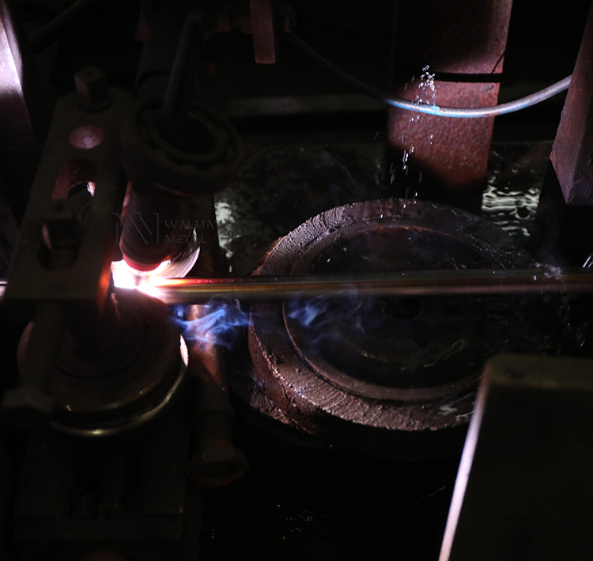
Weld with 316L filler, ER316LSi for TIG and MIG, and back-purge every joint that will contain product. Do not substitute 308L: the resulting weld bead has no molybdenum and becomes the pitting site. Remove heat tint by pickling and passivating, because tinted oxide inside a 316 line is chromium depleted and will fail in exactly the chloride service the grade was bought for. Mandrel bending is practical to 1.5 times diameter centreline radius in thin wall and 2 to 3 times in heavy wall.
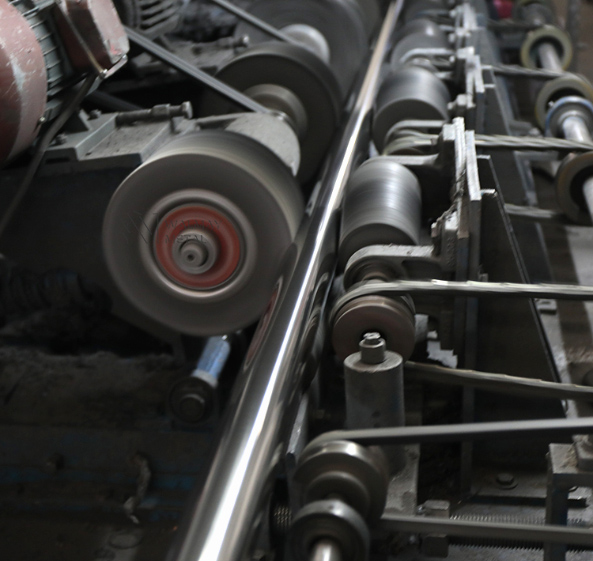
We cut, bevel, bend, weld and finish in house: cutting, bending, welding, polishing and surface treatment, described on the fabrication page.
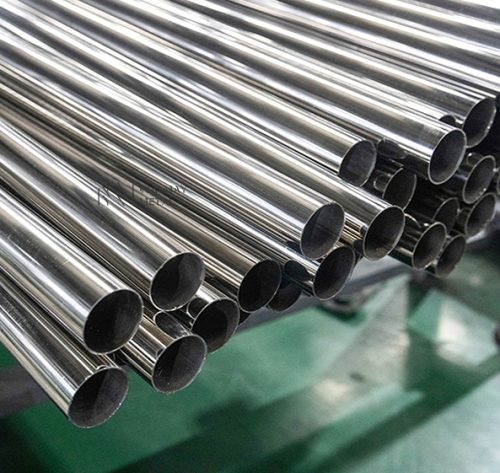



Walmay will help match the right stainless product form and specification for your application, confirm quantities and packing needs, and provide requested documents based on order requirements.
Loading form…